AS FEATURED ON SHARK TANK INDIA

Patriotism Is Having Power Backup: The Generator Generation
Modern Indian patriotism does not look like a slogan anymore. It looks like resilience: an inverter in a cupboard, a generator in a parking lot, solar on a terrace, and a citizen who refuses to let dysfunction dictate how life is lived.
Dinesh Babu Sukumar
3/19/20268 min read


At 7:42 a.m., in a glass apartment in Bangalore, patriotism sounds like a click.
Not the ceremonial click of a camera at a flag-hoisting. Not the click of a TV remote settling into a prime-time argument. A smaller, more honest click: the inverter switching over, seamlessly, when the electricity decides it needs a break.
The coffee machine does not hesitate, the Wi-Fi stays alive, and the work call continues. And somewhere along the way, that small refusal to be interrupted stopped being about electricity. It became a way of thinking.
The ongoing LPG crisis made the same point in a different register. PG kitchens cut back or shut temporarily, restaurants and hotels either raised prices or paused service, homes waited longer for cylinders, and yet life did not stall for long. People improvised, shifted fuels, adapted routines, and found workarounds almost overnight. Everyday life regained its rhythm with startling speed. That is one of India’s most underappreciated strengths: not the absence of disruption, but an extraordinary civic instinct to absorb it, adjust, and keep moving.
Reliability as Patriotism
Not too long ago, on national television, a panelist tried to puncture a founder’s talk of patriotism with a line that drew the usual laughter: “there is no point being patriotic if you cannot even keep the lights on in your office”.
It was meant to sound hard-headed. It was meant to expose sentimentality. But, it accidentally revealed something else: a fault line in modern India. Not between left and right. But, between two kinds of citizens.
The first kind sees failure and draws a conclusion: leave. The second sees failure and asks a different question: what do I need to build so life does not remain hostage to it? That second instinct is producing a new kind of Indian citizen. Let’s call them the ‘Generator Generation’.
This shift from escape to ownership may begin with those who can afford to choose differently, but it doesn’t belong to them alone. The generator generation is here to build that shift. Because, once you stop outsourcing inconvenience, you start noticing where else you’ve been outsourcing responsibility.
The Shift From Escape to Build

Alongside this, there was another quiet unfolding. A generation that grew up exposed to global systems, lifestyles, and standards. They internalised a simple idea: things can work better, even in India.
An Indian stand-up comedian once remarked that the big cities in India are either full of NRIs or full of people who want to be NRIs. It captured a culture in which success meant leaving home. Settled abroad was not a biographical detail. It was a status upgrade.
But, that joke is getting old.
What looked like global modernity often felt like distance, from community, from culture, from a sense of place. The return-to-India story, then, is not only about salary. It is about fit.
Many who left are returning. Many who once wanted to leave no longer romanticize it. Many who never left no longer feel obliged to explain themselves.
Call them ex-NRIs. Call them global Indians. Call them the post-visa class. Sometimes we love to call them “coconuts”: brown on the outside, white on the inside. The label matters less than the behaviour.
Even the coconuts are choosing India. Not out of sacrifice. But, out of self-interest. (Coconut and proud, No Cap!)
They want their children near grandparents, not just on scheduled video calls. They want to belong without the hassle of paperwork. They want cultural continuity without asking for permission to exist. They want opportunity without living permanently as a guest. And they have reached a blunt conclusion: they do not need a perfect system to build a great life. They can engineer their way into one.
That is the real meaning of the generator now.
The Generator Generation
In older India, a generator was an apology. Loud, fuel-hungry, inelegant proof that the grid had failed again. But, in this India, a generator is also a statement: I will not let dysfunction dictate the terms of my life.
The Generator Generation does not wait for clean water. It installs purification. It does not wait for clean air. It buys filtration. It does not wait for uninterrupted power. It does not wait for public services to catch up before deciding what normal should feel like at home.
Once enough households stop participating in survival mode, the baseline shifts. Standards become high. Markets are pushed to change and companies get built differently.
One inverter does not fix the grid. But a generation that refuses outages changes what outages are allowed to be. That is how real cultural change happens. Not only through law or speeches, but through the pressure of expectations.
And this expectation is not limited to electricity. A nation reveals itself not in what it celebrates, but in what it does with its discards.
What the Kitchen Reveals
If you want the truth about a country, do not begin with slogans. Begin with its sinks.
Wet waste is where infrastructure stops being a policy and becomes personal. It exposes a deeper habit: do we, as citizens, take responsibility at the source, or do we push the mess into someone else’s life and call that practicality?
India’s default answer has long been simple: out of sight, out of mind. Put it in a bag. Wrap the problem up and hand it to someone else. Let it disappear. Let “outside” deal with it. But outside is not a magic zone. It is someone else’s street, someone else’s lungs, someone else’s labour, everyone’s landfill.
The cost never disappears. It merely changes address.
And yet, even here, where the problem is visible, behaviour does not stick.
The Misreading: The Investor Paradox
From the outside, this gets misread. When behaviour does not stick it is easy to assume people do not care. This is where the familiar Indian gatekeeping cynicism enters the room.
“Indians will not pay for this”. “Indians do not care”. “The city is dirty anyway, so why bother?”
The most revealing version of that sermon came from some old school investors we had consulted before Mankomb was incorporated. One said that in India, even if people see a road accident, many keep driving, relieved it was not them. Why would they care about keeping the city clean? Another argued that if it is free to throw waste out the window, why would anyone pay to manage their own waste?
Then came the confession, almost always in the next breath: “I will be ordering a Chewie for my home. I need it. But you will not find too many people like me.”
The same class that doubts India’s civic behaviour privately purchases relief from India’s civic mess. They want cleanliness and hygiene inside their own walls while denying that the demand can scale beyond them. But, they are wrong.
The “India is poor” reflex is outdated. The “nobody pays for quality” stereotype is dying. There is a growing class of Indians who want premium, dependable, hygienic, modern products, and want them here.
The problem is not that people do not care. It is that systems demand too much from them, too consistently. And if that is the problem, then it is not a people problem. It is a design problem.
Designing for Reality
Designing for behaviour like this means starting from a different premise. Not asking how to make people more disciplined. But asking what would happen if discipline was not required in the first place. Because the problem was never awareness.
It was the effort required to act on it, every single day. And effort does not scale.
What would it look like to build a system that works even when people are busy, distracted, or inconsistent?
One that does not depend on reminders, routines, or motivation? One that simply works, quietly, in the background?
Operational Patriotism
People are tired of living like tenants in their own cities. They are tired of treating inconvenience as fate. They want agency. Dignity. Convenience without guilt.
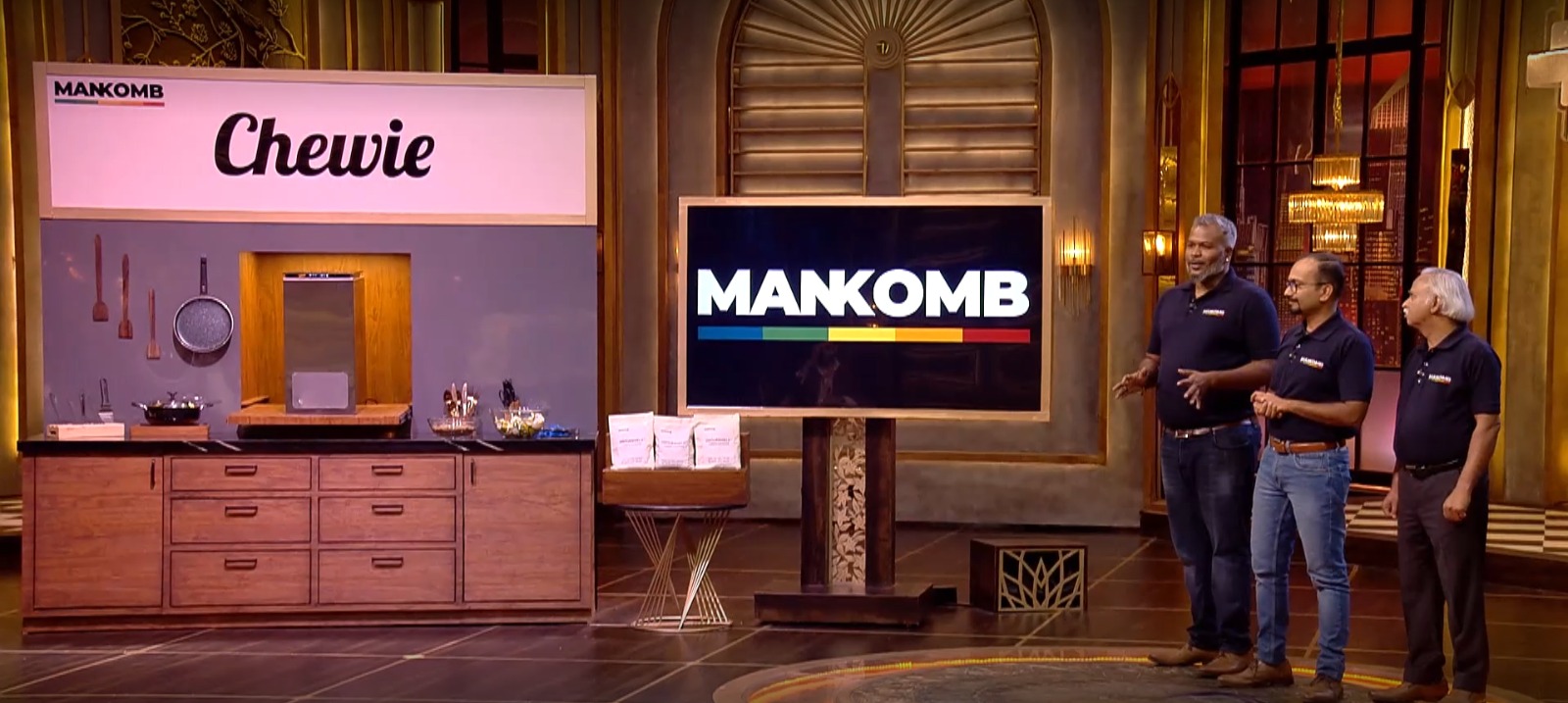
This is where Chewie fits the moment.
Not as a hobbyist composter. Not as a green guilt-reliever. Not as a decorative gadget for rich kitchens. But, as infrastructure. Its premise is plain: your wet waste is your responsibility. Not the housekeeper’s. Not the municipality’s. Not the landfill’s.
That sounds inconvenient until the inconvenience is removed.
Set it and forget it. No stirring. No smell. No pests. No daily negotiation with a bin that feels like a moral tax.
In cities where premium consumers already buy RO systems, air purifiers, robot vacuums, smart locks, and every conceivable device that buys time and control back, wet waste remains one of the last ugly, unresolved domestic failures. Chewie does not sell “composting.” It sells hygiene at the source.
It sells control, cleanliness, dignity and the right to not outsource stink and moral discomfort to someone else.
That is why the patriotism argument works, but only when framed correctly. Not as chest-thumping. Not as a sentiment. Not as a demand that people love India despite its failures. But, as operational patriotism.
Patriotism Beyond the Labels
The old patriotism was often performative: loud, symbolic, emotionally satisfying, and operationally useless.
The new patriotism is quieter. Harder. More expensive. It looks like maintenance. It looks like competence. It looks like standards. It is not saying “India is great.” It is behaving like India will be great, and working towards it accordingly.
That means refusing to normalize decay. Refusing to externalize the consequences of convenience. Refusing to build private comfort on public filth. Refusing to treat civic collapse as a permanent feature of Indian life.
A confident country is not one whose citizens insist it is already perfect. A confident country is one whose citizens behave like greatness is possible and begin building the conditions for it. Keep the lights on. Buy that back up. Build redundancy. Run your home like a system that deserves reliability.
But do not stop at electricity. Because the generator was never the point. The point was what the generator represents: a citizen who refuses to be held hostage by what is not fixed yet.
So, when the next generation looks at your home, will they see a family that merely lived in India, or one that took ownership of India?
What kind of Indian are you?
For decades, the script of Indian aspiration was simple: study hard, get out, settle abroad, send money back, return for weddings, complain about “the system” in India, and praise “systems” elsewhere. India was the internship. The West was the full-time job.
It was not always snobbery. The brain drain was not a betrayal. Often, it was the justified ROI.
But the math has changed. Not because India became perfect or because the West became evil. It did not. But because the West stopped delivering what it promised, and India stopped being condemned to what it once was.
The foreign dream, for many, became a bundle of compromises. Wearing luxury as a costume: visas as suspense, healthcare as financial risk, loneliness disguised as independence, high rent marketed as opportunity, and the constant feeling that you are welcome only so long as you are useful.
At the same time, India produced something it did not have at scale before: a large and visible class that can pay for quality and refuses to apologize for wanting it. This part matters because India did not just get richer, it got less resigned. Ownership began to look more attractive than escape.
The Return and the Realisation


Support
E: social@mankomb.com
M: 9739243943 (9am-5pm)
Connect
Connect. Follow. Stay connected
Copyright © 2025 | Mankomb Technologies | All Rights Reserved