AS FEATURED ON SHARK TANK INDIA

“Sustainable Living” or as Our Ancestors Used to Call It, "Living"
There's a word that gets thrown around a lot these days, at dinner tables, in boardrooms, in government circulars, in startup pitch decks. "Sustainable." It has somehow come to mean, both everything and nothing at the same time. A hashtag. A font choice. A product category. But strip away the branding, and what you're left with is something far older and far more honest than any marketing campaign.
Rushali Mariam & Dinesh Babu Sukumar
3/11/20267 min read
Sustainability, today, needs to be discussed in the context of a world that is changing faster than ever before. As cities grow, lifestyles accelerate, and technology reshapes how we live and consume, there has been a quiet shift happening in many urban homes today.
On one side sits the idea of sustainability. Reusable everything. Composting. Conscious consumption. Buy less. Waste less. Live lightly on the planet.
On the other side sits the reality of urban life. Long commutes. 10-hour workdays. Small apartments. Overflowing garbage bins. Appliances that mysteriously stop working just when the warranty ends.
Somewhere in the middle of this tug-of-war sits an invisible urban class, carrying an unseen burden: the expectation to “do better” for the planet while navigating systems that rarely make sustainable choices easy.
Sustainability Lives in Every Corner of Your Day
Here's what I find most striking: sustainability isn't a category. It doesn't have a designated corner of your life where it lives. It exists everywhere around us.
The raagi mudde your mother made on a Tuesday evening with barely any processing versus the pizza order on a quick commerce app at 9:30 PM after a meeting that ran long. Both are real choices made by real people in the same city on the same night. The footprint difference between them is significant. Neither person is a villain.
The neem twig versus the thirty-step skincare routine with serums flown in from Seoul. The same sesame oil that Ayurvedic texts documented two thousand years ago is now amber-bottled, rebranded as "clean beauty," and sold at a 1000% markup. We left home, dressed it up, and charged ourselves for the privilege of returning.
The small apartment in a walkable neighbourhood versus the 4,000-square-foot villa with four ACs running through every April. The bicycle versus the EV. The Kanjivaram that was never designed to go out of style versus the fast-fashion kurta that looked fine for one season and is now somewhere in a landfill in Tamil Nadu near the river that runs blue with dye.
The pressure cooker your mother bought in 1987 that still works versus the appliance engineered to fail just outside its warranty window.
Every single one of these is a choice. And those choices, added up across ten million households in one city, become the condition of the ground, the water, and the air that we all share.
The conversation around sustainability has been framed incorrectly for a long time. Not because the goal is wrong. The planet absolutely needs more responsible consumption. But the responsibility has been distributed unevenly, and the solutions offered often ignore how people actually live.
To understand sustainability today, we need to talk about the three groups that shape it.
The Economics of Sustainability: Who Can Afford What
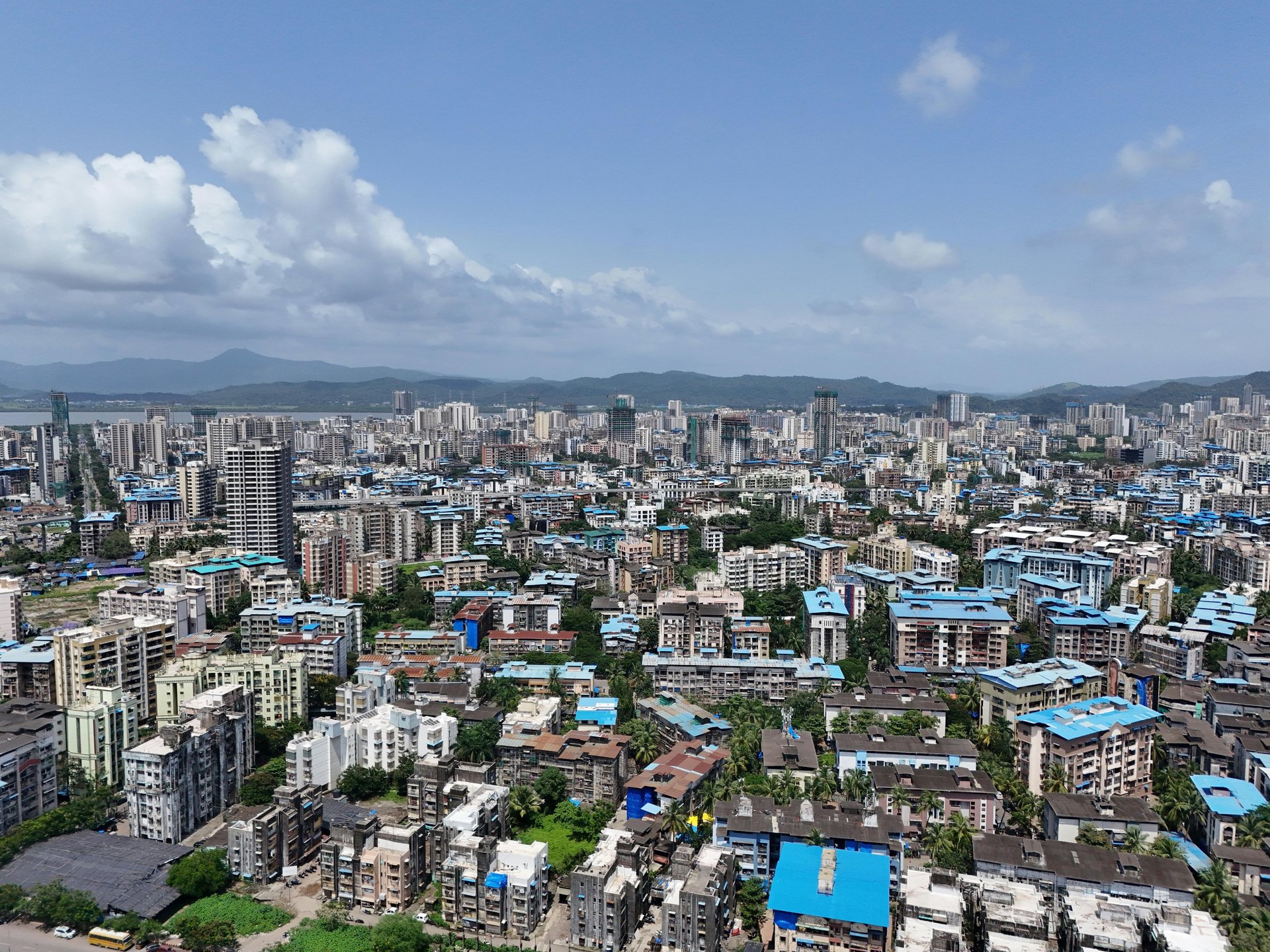
Here is the truth that nobody in the sustainability conversation wants to say out loud.
The economically challenged have no choice but to be sustainable. The affluent have every choice to be sustainable. And the urban class, honestly, just doesn't have the time.
In a village in northern Karnataka, a woman is brushing her teeth with a neem twig she broke off a tree by the road. She is not doing this because she read about Azadirachtin's antibacterial properties in a wellness newsletter. She's doing it because it's free and it works. She cooks with whatever the season offers, wears clothes until they become dust, fixes things rather than replaces them, and returns her organic waste to the earth without thinking twice.
The point is not to celebrate constraint. The point is that embedded inside her life is a wisdom we have violently discarded and that the principles are worth recovering, even if the conditions are not.
On the other hand, something genuinely interesting is happening among India's affluent. The senior director in Indiranagar with the built-in refrigerator and the wine cooler is also, quietly, putting solar panels on his terrace. His wife has replaced every plastic bottle in the home with copper and steel. They've switched to organic produce, not as sacrifice, but as a considered choice. They bought an EV because over ten years it makes financial sense, and also because they have a conscience and a child who asks questions. Their next home is being designed with passive cooling.
This is what sustainability looks like when you have the resources and the room to think. It's not martyrdom.
The affluent can afford to be sustainable. But, do they mean it?
Then there's the couple in Whitefield. Both in tech, toddler in daycare, EMIs on the car, the apartment, the washing machine. They leave at 7:30 AM. They return at 8:00 PM. They feel vaguely guilty every time they tie the kitchen waste bag. But the organic store is forty minutes away on Saturday, and the children have football practice, and there is a family lunch on Sunday, and by Monday morning the guilt has been fully displaced by their routine.
This is not failure. This is simple math. Twenty-four hours, minus work, minus commute, minus children, minus the ten things that broke this week, and there is simply no margin left for another system that requires attention.
Yet when conversations about sustainability happen, the pressure tends to land squarely on this same urban class.
Bring your own container. Stop wasting food. Separate your garbage. Choose greener products. All of these are good ideas. But they also assume something important: that people have the time, infrastructure, and systems that make these choices practical.
Often, they do not.
Sustainability Changes as You Change
When you are young and earning your first real salary, you are trying to figure out what your life can look like. You are comparing. You are upgrading. You want the phone your colleague has, the sneakers that get noticed, the restaurant that will photograph well. There is nothing wrong with this. It is the natural expression of someone who finally has agency over their choices and is testing the edges of that freedom.
But something shifts. It shifts for most people who have been fortunate, around their mid-forties and then the question changes. You've accumulated. The house is full of things. You've had four phone upgrades and genuinely cannot remember what feature the last one added. And you begin, quietly, to understand something your grandmother knew without being told: that what you actually want is less, but better. More intentional. Things that last. Experiences, not objects.
This, too, is sustainability. Not as an ideology. As maturity.
The young person optimises for the maximum they can afford and measures against their peers. The older person optimises for the maximum value with the minimum waste financially, ecologically, emotionally. They want the appliance that runs for twenty years. The fabric that doesn't pull. The car they don't need to replace. Interestingly, they are often willing to pay more upfront for the thing that costs less over time.
Sustainable choices are almost always more expensive in the short term and dramatically cheaper in the long term. Fast fashion is cheap until you add up what you've spent in five years. Cheap appliances engineered for planned obsolescence are affordable until the third replacement. This is not a coincidence. It is a quiet design philosophy embedded into many modern products. And it extracts from your wallet in exactly the same way it extracts from the earth.
The Sustainability That Already Existed
Many households in earlier generations were already practicing sustainability, even if they never used that word.
Think about it. Your grandmother did not need a podcast to tell her to be more sustainable. The steel dabba that held her tiffin was not a limited-edition product; it was just a box, used every day for forty years. Clothes were stitched, re-stitched, repurposed into dusters, and finally used to stuff a pillow. Nothing became nothing. Everything became something else.
This was not environmental activism. It was simply frugality and practicality.
But as cities grew and lifestyles changed, these systems slowly disappeared. Apartment living removed backyard compost pits. Repair culture declined. Convenience replaced patience. Packaging increased. Waste grew.
Today, the same urban families are being asked to “return” to sustainability without the infrastructure that once made it easy.
The Urban Sustainability Problem
For a working professional living in a city, sustainability often collides with three realities:
Time constraints
A 10-hour workday leaves little room for elaborate waste sorting systems or weekly compost maintenance.Space limitations
Many urban homes simply do not have the space to maintain compost pits or large waste management setups.System inconvenience
Municipal waste systems are often inconsistent, meaning even carefully separated waste can end up in the same landfill stream.
When sustainability requires extra effort, extra space, and extra time, it becomes difficult to sustain. This is where the narrative needs to change.
Sustainability cannot rely only on individual discipline. It must also come from better systems and better products that make the sustainable choice the easier one.
What Sustainability Should Look Like Today
Instead of asking urban professionals to completely redesign their lifestyles, sustainability should integrate into existing routines.
The question should not be: “How much more effort can individuals make?”
The better question is: “How can everyday actions become sustainable without adding friction to daily life?”
This is where technology and product design begin to matter.
Consider one of the largest contributors to household waste: wet waste.
Wet waste forms a significant portion of urban waste. When it ends up in landfills, it decomposes without oxygen and produces methane, a greenhouse gas far more potent than carbon dioxide in the short term.
Managing wet waste effectively can dramatically reduce a household’s environmental footprint. Yet traditional composting methods can be messy, slow, and space-intensive for apartment living.
Solutions designed specifically for urban homes can change this dynamic.
Devices like Chewie, for instance, approach sustainability from a different angle. Instead of asking households to manage compost pits, maintain waste systems, or build new habits around food scraps, the focus is on something simpler: removing wet waste from the household waste stream altogether.
In this way, sustainability becomes something that fits into existing routines, rather than something that competes with them.
The Future of Sustainable Living
If sustainability is going to scale across cities, it cannot remain a lifestyle reserved for people with abundant time or abundant money.
It must work for the busy middle class. The people juggling work deadlines, family responsibilities, long commutes, and the small chaos of daily urban life.
Real sustainability will look less like perfection and more like small systems working quietly in the background. Appliances that last longer. Products that reduce waste automatically. Infrastructure that supports responsible disposal without requiring constant effort.
The goal is not to create guilt around consumption. The goal is to remove friction from sustainable choices. Because when sustainability becomes easy, people live it.
Support
E: social@mankomb.com
M: 9739243943 (9am-5pm)
Connect
Connect. Follow. Stay connected
Copyright © 2025 | Mankomb Technologies | All Rights Reserved