


Consumer DeepTech: Why food waste needs intelligent bioconversion at source
Food waste is usually treated as a logistics problem. It may be more useful to think of it as a biological process-control problem.
RESEARCH NOTE. The emissions table and pathway discussion in this article describe mechanisms supported by published literature. Mankomb has not yet completed controlled measurements of Chewie’s CH₄, N₂O, NH₃, H₂S, VOC or CO₂ emissions. Early output observations (pH, germination and seedling phenotype) are preliminary internal findings and are identified as such.
The One Room That Was Never Redesigned
Your kitchen already runs on controlled processes. The refrigerator holds a set temperature. The dishwasher runs a programmed cycle. The air purifier samples the room and adjusts itself. One corner still works the way it did two generations ago: the bin under the sink.
A banana peel dropped into that bin does not wait patiently to become “waste.” Biology begins immediately.
Cells rupture. Water migrates. Readily available carbohydrates begin to hydrolyse. Microorganisms metabolise organic matter. Oxygen can be depleted locally. Proteins and nitrogenous compounds begin transforming. Volatile compounds can form. And, when sufficiently anaerobic conditions develop, organic carbon can eventually enter methanogenic pathways.
Translated: microbes start feeding the moment the peel leaves your hand. While air is available, they break it down cleanly. This is aerobic decay. When the air inside the bag runs out, a different population takes over. This is anaerobic decay, and it produces the smell, the liquid at the bottom of the bag and, eventually, methane.
Yet our waste-management architecture generally starts somewhere else. Put the material in a bin. Store it. Collect it. Transport it. Aggregate it with material from other homes. Transfer it. Sort it. Transport it again. Then, somewhere downstream, attempt to control the biology.
That model deserves reconsideration. What follows traces the banana peel through three acts: the problem as it exists in every home today, the path from uncontrolled decay to controlled conversion, and what becomes possible when that biology is managed inside the kitchen.
The Bin Under the Sink
A Chain Nobody Designed
For most households, the story ends when the bag is tied and handed over. It does not. The bag has only entered a longer chain, and the biology inside it keeps running at every step.
Wet waste remains biologically active while it waits. Research studying stored food waste has observed physical liquefaction, hydrolysis and production of gases including CO₂ and CH₄ during storage itself. The leaking bag and the smell when the lid opens are the visible signs, hours or days before the waste reaches any treatment facility.
The conventional pathway can look something like: Kitchen → bin → building storage → collection → truck → transfer → sorting → treatment facility → composting/landfill → redistribution.
The scale of that chain is larger than most people assume. In 2022, the world wasted approximately 1.05 billion tonnes of food at household, food-service and retail levels. UNEP estimates that food loss and waste contribute roughly 8–10% of global greenhouse-gas emissions. Households alone accounted for about 631 million tonnes of the 2022 total.
Roughly six of every ten tonnes of wasted food leave through home kitchens, not restaurants or supermarkets. The household is the largest single source.
The problem is therefore not only that we waste food. It is what happens after food becomes waste.
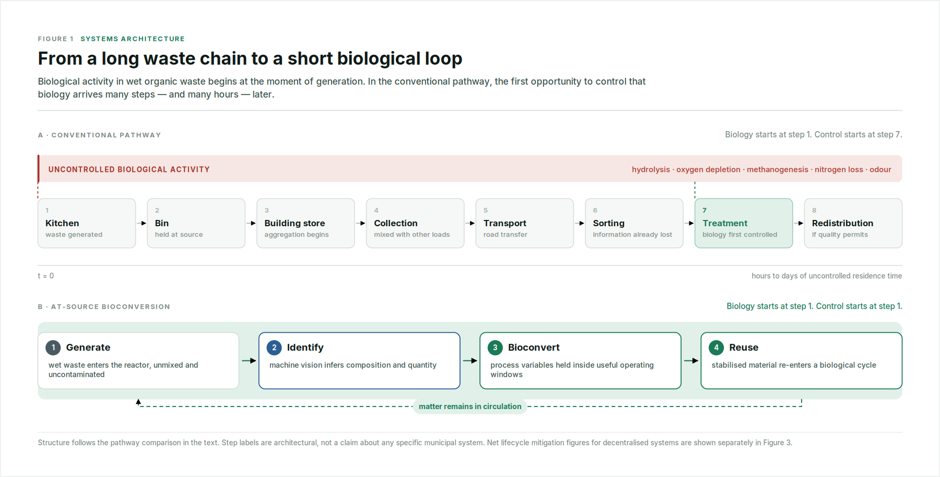
Figure 1. From a long waste chain to a short biological loop. Biological activity begins at the point of generation; in the conventional pathway the first opportunity to control it arrives several steps later.
The Emissions Problem Begins with Biology
Landfills are particularly problematic for wet organic material because decomposition takes place under oxygen-poor conditions. Compacted and buried, food is sealed away from air, the exact condition that favours methane-producing microbes.
The U.S. EPA estimates that although food waste represents roughly 24% of material disposed in U.S. municipal solid-waste landfills, it is responsible for approximately 58% of their fugitive methane emissions. Food decomposes rapidly enough that a significant fraction of its methane can be produced before landfill-gas capture systems are operating effectively.
Methane matters because a molecule of carbon emitted as methane has a very different climate effect from carbon released through predominantly aerobic biological respiration. IPCC AR6 assigns non-fossil methane a 100-year global warming potential of about 27 times CO₂, while nitrous oxide is approximately 273 times CO₂ on the same basis.
The same carbon atom in the same peel can leave as carbon dioxide or as methane. The difference is not the food. It is the conditions around the food, and at the moment those conditions matter most, nobody is managing them.
This does not mean aerobic bioconversion is emission-free. It is not. Microbial respiration produces biogenic CO₂. Nitrogen transformation can produce ammonia or nitrous oxide. Poor oxygen transfer can create local anaerobic zones. High moisture can change gas-transfer dynamics. Sulphur-containing substrates can generate odorous reduced compounds.
The engineering objective is therefore not to pretend that biology produces no emissions. It is to control the biological pathway.
The Road From Decay To Control
First Trial: One Food, Many Fates
A plate of leftovers can leave as water vapour or as a potent greenhouse gas, depending on the air, moisture, heat and time it meets. Each row below is a fork in that road. The table describes mechanistic possibilities. It should not be interpreted as measured emissions from Chewie; Mankomb has not yet conducted controlled gas-emission measurements.
| Biological input or condition | Likely pathway | Potential output / emission | Why it matters | Relevant process-control variable |
| Organic carbon + sufficient oxygen | Aerobic microbial respiration | Biogenic CO₂, H₂O, heat | Normal consequence of aerobic decomposition | Aeration, mixing, temperature |
| Organic carbon + oxygen depletion | Anaerobic degradation / methanogenesis | CH₄ | High climate potency | Aeration, moisture, mixing, free-air space |
| Nitrogen-rich food / proteins | Ammonification | NH₃ | Odour and nitrogen loss | C:N, temperature, moisture, airflow |
| Nitrogen compounds + changing aerobic/anoxic conditions | Nitrification / denitrification | N₂O | Very high GWP | Moisture, aeration, nitrogen availability |
| Sulphur-containing substrates + reducing conditions | Anaerobic sulphur metabolism | H₂S / reduced sulphur compounds | Strong odour; local air-quality concern | Oxygen availability, moisture, airflow |
| Fats, proteins and complex cooked food | Volatilisation / incomplete degradation | VOCs and odorous compounds | User experience and air quality | Temperature, retention time, airflow, filtration |
| Water-rich kitchen waste | Evaporation / biological water release | Water vapour | Influences reactor state rather than climate directly | Moisture removal, temperature, exhaust |
| Controlled biological degradation | Mineralisation + stabilization | Stabilized organic fraction | Potential pathway back into biological cycle | Complete reactor environment |
Nearly every unwanted outcome, from the rotten-egg smell of hydrogen sulphide to methane, traces back to the same few variables. One of them, C:N, is the balance of carbon (peels, leaves, grains) to nitrogen (proteins, lentils, meat) that microbes need to work well.
Experimental work on rapid kitchen-waste composting demonstrates why this cannot be reduced to one setting. Moisture, aeration and C: N interact with both maturity and gaseous emissions. One study found C: N to be particularly important to maturity, while moisture and aeration strongly influenced gaseous outcomes including ammonia and hydrogen sulphide.
More recent work goes further. Machine-learning models trained on composting data have predicted CO₂, CH₄ and N₂O emissions with reported R² values of approximately 0.97, 0.97 and 0.91, respectively. In that analysis, aeration was particularly influential for methane, while moisture content strongly influenced nitrous oxide.
R² measures prediction accuracy, where 1.0 is perfect. If emissions can be predicted from process conditions, they can in principle be steered by changing those conditions.
There is therefore no single optimum temperature, moisture value or fan speed independent of everything else. Organic-waste conversion is a multivariable biological control problem.
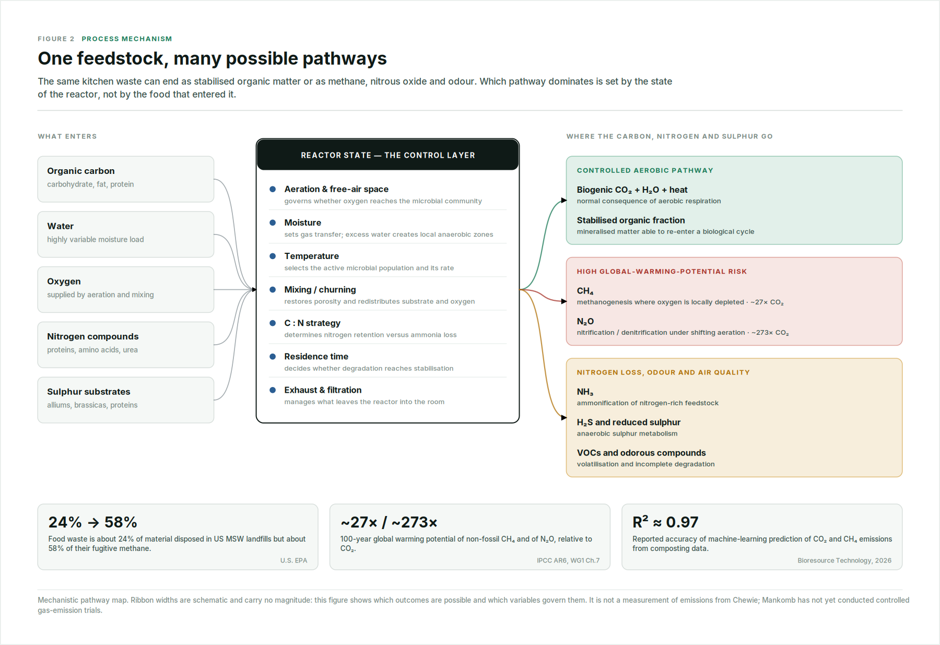
Figure 2. One feedstock, many possible pathways. A mechanistic map of how reactor state determines whether carbon, nitrogen and sulphur leave as stabilised organic matter or as methane, nitrous oxide and odour. Pathways are possibilities, not measured emissions from Chewie.
Second Trial: Where To Intervene?
The best moment to understand kitchen waste is probably before it disappears into the waste stream. At the point of generation, we know where it came from. It has not yet been mixed with plastics, metals, glass, chemicals or other municipal waste. Once waste is aggregated, information is progressively lost.
Indian research analysing municipal composts from 29 cities found that compost made from source-separated biological waste contained substantially more organic matter, nitrogen and phosphorus and substantially lower concentrations of several heavy metals than compost derived from mixed wastes.
That does not mean every form of decentralised composting automatically produces good output. A major review of household biodegradable-waste composting warns that poorly managed decentralised systems can themselves produce immature compost and greenhouse or odorous gases, particularly when moisture is excessive, free-air space is inadequate or the C: N balance is poor.
This is the balcony compost bin that turns wet, smells and draws flies.
Decentralisation alone is not the innovation. Control is.
Nor is the payoff where most people expect it. A particularly relevant 2026 lifecycle study examined 517 decentralised composting installations across Bengaluru, Mumbai, Pune and Delhi NCR, processing 2,085 tonnes of organic waste. The systems delivered estimated net mitigation of approximately 0.15 tonnes CO₂e per tonne of organic waste treated. Approximately 95% of the calculated mitigation resulted from avoided landfill methane. Avoided transport was comparatively small. The study also found that manufacture of the composting equipment itself represented the majority of lifecycle emissions associated with those decentralised systems.
The argument for at-source conversion is not primarily “eliminate the garbage truck.” It is to intervene in the biological fate of organic matter before it travels far enough downstream to enter uncontrolled or less desirable pathways.
Figure 3. Where the climate benefit actually comes from. Composition of mitigation and of lifecycle burden in a 2026 study of 517 decentralized composting installations in India.
From Composting to Precision Bio-conversion
The trials point to one conclusion: control the biology, at the source, early. This is the problem Mankomb set out to solve, and a kitchen adds a difficulty no municipal plant faces: extreme feedstock variability.
Yesterday’s input may have been rice, dal and vegetable peels. Today’s could contain chicken, bones, fruit, oils, curry leaves and chapatis. Tomorrow’s may be mostly watermelon. Those materials do not have identical water content, carbon availability, nitrogen content, fat and protein content, particle structure, biodegradation kinetics, oxygen demand or thermal behaviour.
A fixed timer cannot understand those differences. A temperature sensor alone cannot understand them either. Conversion has to proceed as a sequence, each stage watched and adjusted.
| Stage | Biological / engineering purpose | What must be understood or controlled |
| 1. Feedstock recognition | Determine what has entered the system | Composition, quantity, characteristics of input |
| 2. Physical conditioning | Increase accessibility of material to subsequent conversion | Particle dimensions, mixing, exposed surface area |
| 3. Moisture conditioning | Bring highly variable wet food into a processable range | Water content, airflow, temperature |
| 4. Mesophilic biological activation | Rapid utilization of readily degradable substrates begins | Temperature, moisture, oxygen demand |
| 5. Thermophilic conversion | Accelerated microbial degradation and high biological activity | Temperature-time history, aeration, mixing |
| 6. Active process regulation | Keep biological environment within useful operating windows | Temperature, moisture, aeration, churning, time, additives |
| 7. Stabilization | Readily biodegradable substrate declines and biological activity changes | Temperature trajectory, reactor state, residence time |
| 8. Finishing / output conditioning | Produce consistent material suitable for handling | Moisture and physical characteristics |
| 9. Output validation | Determine whether conversion produced useful, safe material | pH, C:N, organic matter, stability, germination, pathogens, nutrients |
Mesophilic and thermophilic are the two temperature bands of microbial work: first moderate, then hot, where breakdown is fastest.
This distinction matters because drying is not the same as biological conversion. A published investigation of an electric food-waste processor found that it substantially reduced and hygienicses food waste, but its final material did not meet the characteristics expected of mature compost.
Many machines sold as home composters are, in effect, dehydrators. The mass shrinks, but that is insufficient. The scientifically interesting question is: What biological transformation actually occurred?
Figure 4. The nine-stage bioconversion journey, with the variables that must be observed or controlled at each stage. The trajectory strip indicates shape only, not measured values.
So why does AI belong inside the bioreactor?
Microorganisms do not need AI to decompose food. AI becomes important because the feedstock and biological state are both variable and partially observable. If every batch were chemically identical, conventional deterministic control could be sufficient. A household kitchen is the opposite.
The system needs to infer: What entered? How much? How is this batch likely to behave? What is happening inside the process now? Should temperature, aeration, mixing, moisture management or process duration change?
Research is moving in this direction. A 2025 study demonstrated a sensor-equipped composting bioreactor continuously monitoring temperature, moisture, CO₂ and NH₃, with machine-learning models used to classify maturity stages and predict final-product quality. Another 2025 study combined environmental and emissions sensing with interpretable machine learning to predict compost maturity and monitor gaseous emissions using variables including temperature, C: N, ammonia, pH and nitrate.
The emerging architecture is clear: Sense → interpret → predict → control → observe again. It is the loop an experienced cook runs at the stove, except that nobody can see, smell or taste what is happening inside a reactor. The machine has to do the judging.
Mankomb’s Patent Approaches the Problem from Exactly This Direction
Mankomb’s granted Indian patent, IN600113, describes considerably more than a heated waste container. The invention begins by capturing multiple images of incoming wet waste. An AI processing unit is configured to identify its composition and estimate its quantity and constituents. That information is then used to adjust bio-decomposition parameters, including the regulation of biological additives such as enzymes, microorganisms and other bio-agents according to the composition and volume of the waste.
That interpretation connects to physical processing: shredding, moisture conditioning, an ageing and digesting chamber, stage-wise sensing and feedback, exhaust handling and retrieval of the processed material. Sensors and valves provide feedback from each stage, and the control architecture determines whether subsequent operations should proceed.
See the waste. Understand the waste. Prepare the waste. Control the biology. Observe what happens. Change the process accordingly.
An ordinary automated appliance follows instructions: run the heater for X minutes, operate the motor every Y minutes, stop after Z hours. An intelligent biological process asks something different: Given what entered the reactor, what trajectory should this material follow? Is temperature developing as expected? Is moisture leaving the useful operating region? Should aeration or mixing change? Does this feedstock need different additives? Is the current stage complete?
None of AI, sensing, mechanical engineering, embedded control or microbiology independently creates the system. The Deep Tech resides in their integration around an unpredictable biological feedstock.
Emissions Are Ultimately a Control Problem
Mankomb has not yet measured Chewie’s CH₄, N₂O, NH₃, H₂S or VOC emissions under controlled experimental conditions. That distinction should be explicit.
We cannot scientifically state today that Chewie reduces methane by a specified percentage. But the patented architecture controls many of the same variables that scientific literature identifies as determinants of emissions: moisture, aeration, C: N, temperature, residence time and mixing. It creates the ability to actively manage whether wet organic material follows desirable aerobic pathways or develops conditions associated with methane, nitrogen losses and odorous emissions.
The next frontier can go further. Gas sensing, process-state inference and machine-learning models could eventually allow a biological system not merely to react to emissions after they occur, but to predict an approaching undesirable state and alter reactor conditions before it develops. That is where waste treatment begins to resemble precision biochemical engineering.
Figure 7. Mechanism today, measurement tomorrow. Ticks mark variables the architecture acts on; they are not quantified emissions outcomes.
The Kitchen, Rebuilt
What Comes Out Matters Just as Much
For an at-source circular system, reducing the amount of food waste is not enough. The output must have biological value. Mankomb’s current evidence is preliminary, but encouraging.
Internal trials of material produced by Chewie have measured a pH of approximately 6–7. Seeds germinate successfully in the regenerated material. In Mankomb’s internal comparisons, germination rates have appeared broadly comparable with coco peat. A pH of 6 to 7 is near neutral, the range most garden plants prefer; coco peat is the coconut-husk medium nurseries use as a standard growing base.
More interestingly, seedlings grown in the Chewie-derived material have repeatedly appeared to develop thicker stems and larger leaves than corresponding seedlings in coco peat.
Those observations should not yet be interpreted as proof that Chewie’s material contains more nutrients, improves plant growth, constitutes mature compost or is agronomically superior to coco peat. Mankomb has not yet completed the laboratory characterization required to make those conclusions. Possible explanations include nutrient availability, organic matter characteristics, water retention, microbial effects or combinations of these; determining the mechanism requires measurement.
The appropriate scientific position today is therefore: the output demonstrates biological compatibility and promising preliminary plant-growth behaviour. Full compositional, stability, nutrient, safety and agronomic characterization is the next validation step.
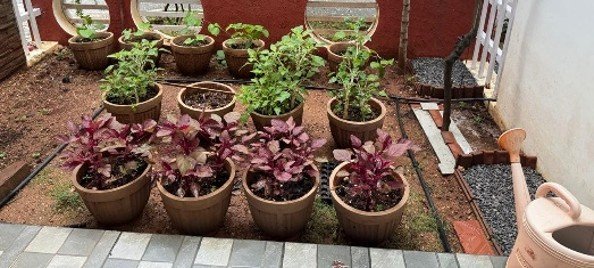
Figure 8. Plant germination and growth rate study with Regenerated Soil™ from Chewie
Matter Remaining in Circulation
Food begins in a biological system. Plants draw water and minerals from soil. Carbon enters through photosynthesis. Agricultural systems transform those resources into food. Humans consume part of it. When the remainder is buried in mixed waste, much of its biological value is lost.
The meaningful endpoint is therefore not: the waste became smaller. It is: the material underwent a controlled transformation and remained biologically useful afterwards.
Proving that rigorously will require laboratory analysis of organic carbon, C:N ratio, nitrogen, phosphorus, potassium, electrical conductivity, stability/respiration, germination index, pathogens and other quality parameters. That is a scientific validation programme, not a change in technological direction.
The Industrial Bioreactor, Compressed into a Home Appliance
It is relatively easy to build a box that dries kitchen waste. It is substantially harder to build a machine that can repeatedly accept an unpredictable biological feedstock and generate a controlled outcome inside a consumer’s home.
Industrial biological processing has spent decades becoming more sophisticated: better sensing, aeration and thermal control, more controlled microbial environments, more precise material conditioning and more predictive modelling. The question Mankomb has been working on is whether that sophistication can be compressed into the physical, economic and experiential envelope of a household appliance.
Can the machine see what was thrown into it? Can AI run locally on appliance-grade electronics? Can it compensate for the fact that no two kitchens generate the same waste? Can a miniature reactor manage temperature, moisture, mixing and airflow? Can odour and exhaust be controlled? Can a process involving microbes, heat, water, enzymes, food particles and gases become as uneventful for the consumer as operating a washing machine?
Answering yes requires disciplines that rarely share a chassis:
- Computer vision and edge AI to recognise and interpret the feedstock locally.
- Embedded electronics to observe and command the machine.
- Mechanical engineering to shred, transfer and mix material.
- Thermodynamics and mass-transfer engineering to manage heat, air and water.
- Microbiology, biochemistry and process engineering to drive and regulate conversion.
- Filtration and exhaust management to make the process compatible with a home.
- Data science to learn from thousands of future conversion cycles.
Mankomb’s patent joins these functions into an integrated architecture rather than treating them as isolated features. The most interesting asset may emerge only after deployment. A composting plant receives tonnes of aggregated waste. A home appliance can observe individual additions of food as they enter, connect them with subsequent reactor behaviour and learn which interventions succeeded. That creates the possibility of a progressively improving biological process model.
Figure 9. The seven disciplines that must hold together inside a household appliance. Ring order indicates proximity to the biological process, not relative importance.
Significant validation remains. Emissions must be measured. The extent of biological stabilization must be quantified. Nutrients and organic carbon must be characterised. Safety and pathogen performance must be validated. Plant-growth observations must become controlled trials. That work matters because the ambition deserves a higher evidentiary standard than an ordinary appliance.
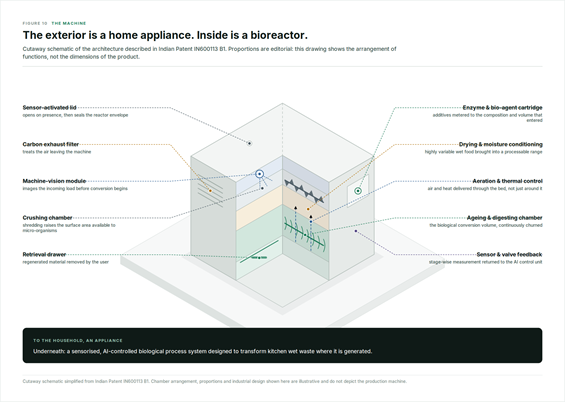
Figure 10. Cutaway schematic of the appliance. Arrangement of functions simplified from Indian Patent IN600113 B1; proportions and industrial design are illustrative.
The New World: A Different Architecture for Organic Waste
The waste industry was built around moving matter. The next generation may increasingly be about understanding and transforming matter where it originates.
Instead of: generate → discard → aggregate → transport → sort → treat → redistribute
it becomes possible to imagine: generate → identify → bio convert → reuse.
At the point of generation, the material is still clean. Its history is still known. Its composition can potentially be understood. And its biological trajectory can still be actively controlled.
Return to the banana peel. In the old sequence, it waits in a bag, leaks, smells and crosses the city before anyone attempts to manage what is happening inside it. In the new one, it is identified on entry, conditioned, converted under controlled conditions and returned as material that can grow the next plant. The household did nothing except drop it in.
The homes that washing machines, refrigerators and dishwashers transformed did not become more virtuous. They became better designed. Wet waste is the next household system due for the same treatment.
Successful consumer Deep Tech often has an unusual characteristic: the harder the science becomes underneath, the simpler the experience should become above it.
To the household, Chewie is an appliance. Underneath, it is a sensorised, AI-controlled biological process system designed to transform kitchen wet waste where it is generated.
The exterior is a home appliance. Inside is a bioreactor.